Lessons from the Resting Ground
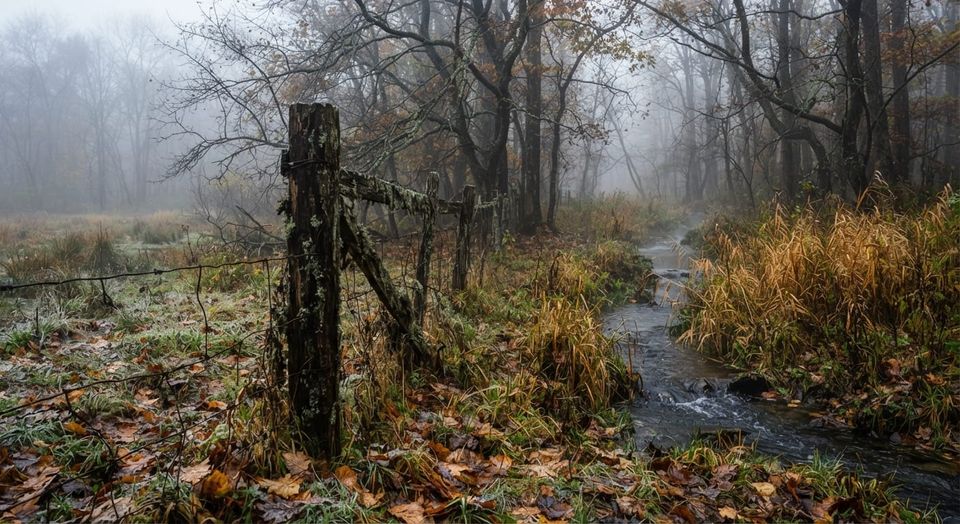
The rhythm of autumn has a quiet, deceptive way of settling in. Outside, the world is stripping itself down to the bone. The leaves surrender their color, the sap retreats back into the root systems deep beneath the hard earth, and the landscape prepares for what looks like an irreversible decline.
To stand in the middle of a garden at the tail end of fall is to stand in a place of profound quiet. Everything is going to sleep. Looking at a bare branch against a gray November sky, it is easy for the senses to convince the mind that life has permanently exited the stage. The cold feels relentless, and the dormancy looks so complete, so absolute, that the promise of a future spring feels almost foolish—a comforting illusion we tell ourselves to survive the dark.
Yet, we know the trees will bloom again. They always do. The work hasn't stopped; it has simply moved underground, out of sight, where the winter chill triggers the quiet, unseen biological processes necessary for future growth.
This patient, aching shift of the natural world mirrors the internal seasons of human grief. When we lose someone we love and watch them pass across that invisible threshold, a personal winter takes hold. The shock and emptiness feel terminal. Grief has a way of freezing time, making the landscape of our inner life feel desolate, stripped bare, and completely devoid of warmth. In the acute depths of that season, the idea of ever feeling whole again feels not just improbable, but wrong—as if feeling warmth again would somehow betray the weight of what was lost. We assume this cold, heavy stillness is our permanent home now.
But time moves, indifferent to our certainty that the world has ended. The days pass one by one, each one marked by the simple, quiet act of surviving it. During those seasons, it might seem like all we can do is take one moment after another - enduring each one as it comes, without hope of the next one being better.
And then, without announcement, something subtle shifts. Just as the smallest change in light signals to the underground root that winter will eventually break, we begin to feel the faintest stirrings of a call back to life. It isn't a sudden awakening or a dramatic thaw. It is a quiet, fragile impulse—a moment where a memory brings a gentle smile before it brings a tear, or a sudden realization that we are engaging with the present moment without the constant weight pressing down on our chests.
We begin to understand that waking up from grief does not mean forgetting. The goal of spring is not to erase the winter that preceded it, but to build upon the quiet work that took place while the ground was dark and cold. We are called to carry the ones we love forward—not as monuments of ongoing anguish, but as living parts of our enduring story. We learn to remember them fully, honoring their presence in our lives, without remaining forever bound to the posture of active mourning. Their presence implies a continuity that is unbroken by biomechanical death, and we begin to live that truth with each and every moment that passes.
The cold season had its purpose; it taught us how deep our roots could go. And when the light returns, we find that while we are not the same as we were before the freeze, we are alive, we are whole, and we are ready to bloom again.