Walking Them Home - Caregiver Narratives from the Shared Death Experience
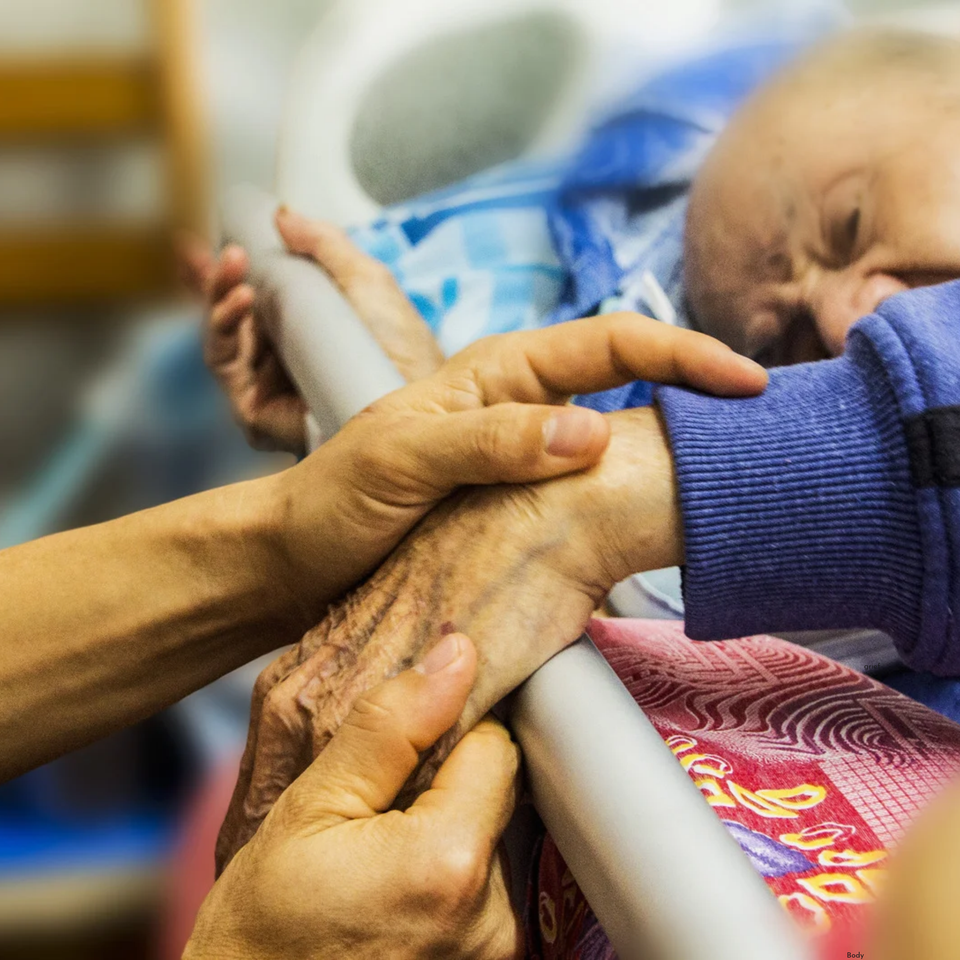
By the time we reach adulthood, most of us have been taught to view death as a hard border—a sharp, mechanical shutdown where life is on one side and absence is on the other. We expect the end to be cold, clinical, and quiet.
Yet those who sit at the bedside—whether a mother holding vigil for her child or a hospice nurse attending a stranger’s final hour—frequently report something radically different. They describe moments where the boundary between this world and whatever comes next grows porous, warm, and illuminated. They describe stepping up to the threshold and, if only for a few minutes, walking their loved ones home.
The Room Lit From Within
A woman who was once my neighbor shared a story with me about her daughter’s final night. Her daughter had been fighting a relentless cancer in her mid-thirties. After months of excruciating pain, organ decline, and weeks of being unable to eat or sit up, her body was simply exhausted. The mother, though devastated, found herself praying for peace—for her child’s suffering to finally come to an end.
Late one evening, as the house sat quietly in the dark, something shifted.
Without warning or assistance, the daughter sat up in bed—a feat she hadn't accomplished in weeks. Though thin and physically frail, she moved with an unexpected grace. The deep exhaustion in her face had evaporated, replaced by a radiant light in her eyes.
At that exact moment, the atmosphere in the room transformed. The chill of the late-night sickroom gave way to a gentle, comforting warmth. The darkness outside seemed to recede as the bedroom became softly illuminated, as though lit from within by a welcoming glow.
The daughter turned, reached out, and took her mother’s hand. The mother noted that the cold, weightless feeling that had characterized her daughter's hands for days was gone; her palm felt vibrant, present, and alive.
"Mom, I feel so much better," she said, her eyes bright and dancing. "I am so glad—I feel so much better! I'm so glad you're here!" She squeezed her mother’s hand with genuine strength.
Then, gently and effortlessly, she leaned back against the pillows and closed her eyes, drifting into a peaceful sleep. Her mother held her hand for another ten minutes, surrounded by the cozy warmth lingering in the room, until she too fell into a deep, untroubled sleep.
When the mother awoke a short time later, her daughter had passed away quietly in her sleep. There had been no struggle, no panic—only the serene wake of a journey already completed.
Beyond Kinship: The Threshold Science
For generations, skeptics dismissed accounts like this as the natural products of grief—hallucinations born of exhaustion, trauma, or maternal longing. But modern thanatology tells a very different story.
When researchers began looking closely at end-of-life phenomena, they identified two distinct, documented occurrences in this mother’s story: Terminal Lucidity (the sudden return of mental clarity and physical energy shortly before death) and a Shared Death Experience (SDE) (where a living person at the bedside experiences the sensory and spiritual transition alongside the dying person).
Crucially, SDEs do not only happen to grieving mothers or spouses. They happen every day to end-of-life practitioners, physicians, and hospice nurses—people with no family relation to the patient, trained in clinical objectivity, and operating without the haze of personal bereavement.
The Luminous Mist
In his foundational work At Heaven's Door, William Peters, founder of the Shared Crossing Project, details the account of a hospice nurse named Joy. She was caring for a male patient with whom she had no prior personal relationship. As the patient took his final breath, Joy didn't just observe his vital signs stopping on a monitor; she watched a translucent, luminous mist gather above his chest and lift toward the ceiling.
Simultaneously, the temperature in the hospital room rose noticeably, and Joy was overwhelmed by an intense wave of unconditional peace and joy—a feeling so profound it brought her to tears. Because Joy was completely healthy and had no emotional attachment to the patient, her experience demonstrates that SDEs are not psychological coping mechanisms, but objective events occurring at the threshold of human consciousness.
The Room Without Walls
Similarly, in Glimpses of Eternity, Dr. Raymond Moody records the testimony of a seasoned physician standing at the bedside of a patient dying from organ failure. As the heart monitor went flat, the doctor felt the physical boundaries of the hospital room dissolve. To his amazement, the walls seemed to expand outward into an infinite landscape of brilliant, ambient light.
The physician described feeling pulled upward alongside his patient into a state of profound calm before "snapping back" into his physical body in the quiet room.
What The Threshold Teaches Us
When we assemble these narratives side by side, a remarkable pattern emerges. The hallmarks remain remarkably consistent across continents, professions, and relationships:
- Atmospheric Shifts: Rooms turning warm, cozy, or filling with unexpected light.
- Sensory Vitality: A sudden return of warmth, strength, or clarity in the departing person.
- Overwhelming Peace: A shared feeling of complete safety that replaces fear and sorrow with calm.
These experiences remind us that dying is not merely a biological failure, but a sacred transition. To "walk someone home" is not a metaphor—it is a quiet privilege extended to those who stand vigil at the edge of life.
For those who are grieving, facing a loss, or contemplating their own mortality, these stories offer a quiet, steady lantern: the threshold between life and death is not a wall of cold darkness, but a doorway lit from within.
To Those Standing at the Edge
If you are reading this while facing your own mortality—if you are sitting in the quiet hours staring into the unknown with fear, anxiety, or a heavy heart—let these stories sit with you for a moment.
We live in a culture that treats death as an absolute end, an isolated room where we must go alone into the dark. But the testimony of those who have stood at the threshold tells a very different story. The warmth in that hospital room, the ambient light rising in the darkness, and the sudden, radiant peace that touches both the departing and the bystander are not accidents. They are glimpses of a reality far larger than our physical bodies can contain.
You are not step-by-step approaching a void. You are walking a path that countless souls have walked before you, surrounded by a continuity of consciousness that does not abandon us when our physical frames wear thin.
You are not alone. You have never been alone. And when your time comes to step through that doorway, your journey isn't stopping—it is simply opening into the light that was waiting for you all along.