The Deep Sleep of Seeds: What the Garden Teaches Us About the Illusion of Loss
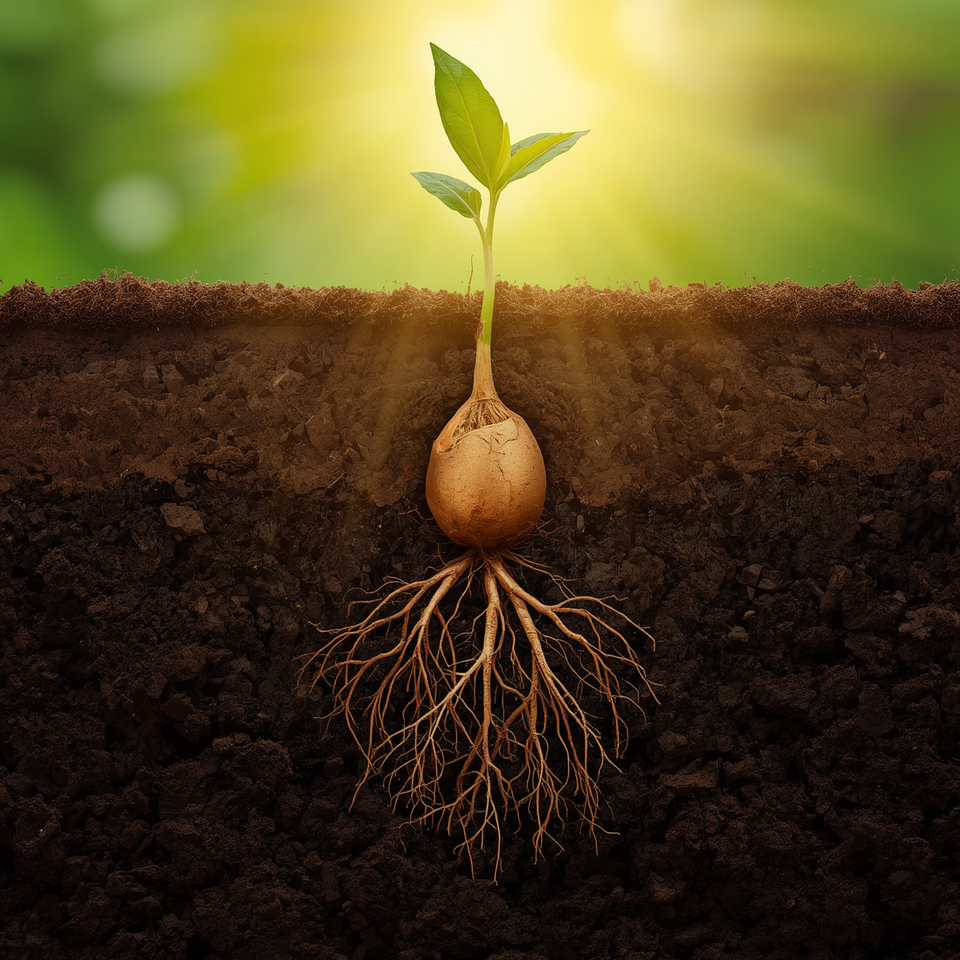
Six years ago, I knelt in the dirt with a packet of lavender seeds and a specific vision of beauty. I followed every line of the instructions. I amended the soil, measured the depth, watered them with a steady, hopeful hand, and waited.
Weeks turned into months. The soil remained stubbornly, silently bare. Eventually, the human timeline does what it always does when faced with prolonged silence: it closes the case. I assumed the seeds were dead, the effort a quiet failure, and the energy spent gone for good.
A few seasons later, I decided it was time for a complete overhaul. I dug into that bed with a shovel, upending its entire layout. I moved the dirt, redistributed the compost, and repurposed the very ground where those seeds had supposedly perished. I transformed it into a vegetable patch, intending to cultivate robust, practical sustenance.
Two years into this new chapter, I was walking down the rows, checking on the lush, thriving green of the vegetables. And there, tucked quietly between the robust crops, was a flash of dusty silver-green.
Lavender. Small, barely there, but undeniably alive and hearty.
I stood there in the afternoon light, completely stunned. I had buried those seeds six years prior. I had literalized their grave by turning the earth over them. Yet, there they were, rising between the rows.
The Biology of the Hidden Vault
As humans, we tend to define life by what is visible to us in the immediate present. If we cannot see it pulsing, growing, or reacting, we pronounce it gone. But nature operates on a much older, more patient clock.
Biologically, those lavender seeds were never dead. They were experiencing what botanists call physiological embryo dormancy.
What is Seed Dormancy? It is a sophisticated evolutionary survival mechanism. Certain seeds possess internal blocks that prevent them from germinating until conditions are exactly right. You can read more about the intricate mechanics of how seeds hold space in this study on seed dormancy and viability.
Lavender is notoriously finicky. It doesn't just need water and soil; it often requires sharp environmental triggers—like fluctuating temperatures or physical disruption—to break its protective shell. When I overhauled the garden bed, turning the soil and exposing it to fresh oxygen and light, I wasn't destroying the past. I was inadvertently providing the exact catalyst those sleeping seeds needed to wake up. What I had mourningly classified as a graveyard was actually a vault, quietly holding life until the structure shifted.
The Cosmos Agrees: Nothing is Lost
This biological resilience isn't a fluke of the garden; it is a foundational law of our universe. When we watch a plant wither, or when we experience the devastating, tangible boundary of death in our own timelines, our immediate human response is to mourn the absolute loss of that energy.
But physics tells a completely different story.
According to the First Law of Thermodynamics, energy cannot be created or destroyed. It can only change from one form to another. You can explore how this principle governs everything from the stars to our own cells in this overview of The First Law of Thermodynamics in Biological Systems.
When a life ends, or when an era of our life closes, that collective energy doesn't evaporate into nothingness. The universe does not allow for empty spaces. Instead, that energy is preserved, broken down, and redistributed. It feeds the soil, binds to the clay, and waits in the quiet bonds of the earth.
The robust growth of my new vegetable crops and the sudden, breathtaking emergence of the lavender were drawing from the exact same pool of preserved life force. The energy of six years ago had simply been repurposed into greater opportunities for impact.
Beneath the Proverbial Soil
We carry so much grief for the things we believe have ended—for the efforts that didn't sprout, the seasons that changed too quickly, and the people who have stepped out of our linear timelines. We experience death as a hard stop.
But if the garden teaches us anything, it is that death is rarely what it seems.
Right now, just beneath the surface of whatever dirt you are standing on, something is emerging. The materials are being recalibrated. The energy of everything you have ever loved, every hand you have held, and every quiet prayer you have planted in the dark is still fully intact. It hasn't vanished. It is simply resting, reading the season, waiting for the ground to shift so it can look you in the eye once more.